
Prayer
The Litany of St Joseph
The full Litany of St Joseph in English and Latin — the 1909 form approved by Pope St Pius X — with its titles, its origin, and how, when, and why to pray it.
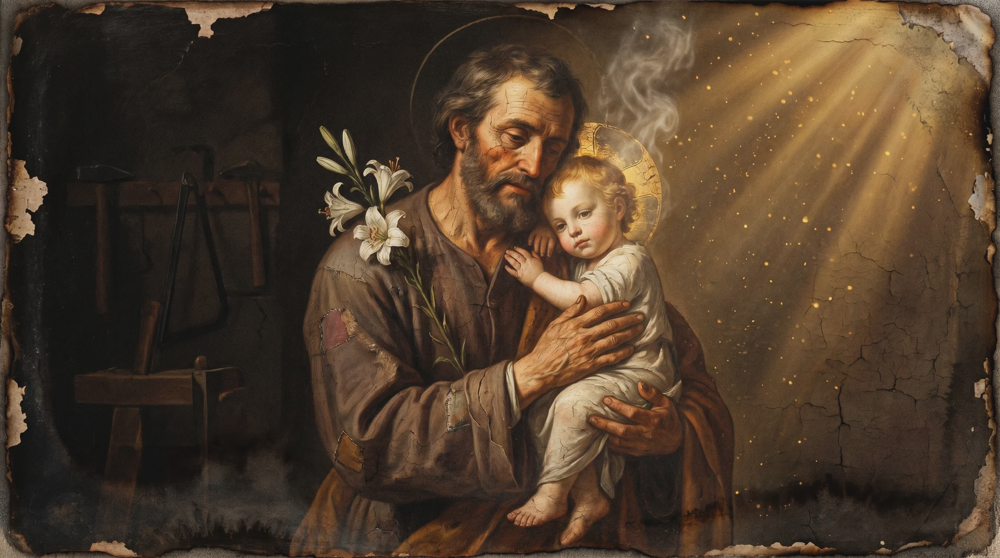
The Litany of St Joseph honours the foster-father of Our Lord and the spouse of the Blessed Virgin under a series of titles, each answered by pray for us. Pope St Pius X approved it for the whole Church in 1909, giving public form to a devotion long cherished among the faithful. Below you will find the full text in English, then in Latin, exactly in the form the Church prayed before 1958.
The Litany of St Joseph (full text)
Lord, have mercy on us. Lord, have mercy on us. Christ, hear us.
God the Father of heaven, have mercy on us.
God the Son, Redeemer of the world,
God the Holy Ghost,
Holy Trinity, one God,Holy Mary, pray for us.
St. Joseph,
Renowned offspring of David,
Light of Patriarchs,
Spouse of the Mother of God,
Chaste guardian of the Virgin,
Foster father of the Son of God,
Diligent protector of Christ,
Head of the Holy Family,
Joseph most just,
Joseph most chaste,
Joseph most prudent,
Joseph most strong,
Joseph, most obedient,
Joseph most faithful,
Mirror of patience,
Lover of poverty,
Model of artisans,
Glory of home life,
Guardian of virgins,
Pillar of families,
Solace of the wretched,
Hope of the sick,
Patron of the dying,
Terror of the demons,
Protector of Holy Church,Lamb of God, who takes away the sins of the world, spare us, O Lord.
Lamb of God, who takes away the sins of the world, graciously hear us, O Lord.
Lamb of God, who takes away the sins of the world, have mercy on us.V. He made him the lord of his household And prince over all his possessions.
Let us pray. O God, in Thy ineffable providence Thou wert pleased to choose Blessed Joseph to be the spouse of Thy most holy Mother, grant, we beg Thee, that we may be worthy to have him for our intercessor in heaven whom on earth we venerate as our Protector; Thou who livest and reignest forever and ever. Amen.
The Litany of St Joseph in Latin
The same litany in the language of the Church, Litaniae Sancti Ioseph:
Kyrie, eleison. Kyrie, eleison. Christe, audi nos.
Pater de caelis, Deus, miserere nobis.
Fili, Redemptor mundi, Deus,
Spiritus Sancte Deus,
Sancta Trinitas, unus Deus,Sancta Maria, ora pro nobis.
Sancte Ioseph,
Proles David inclyta,
Lumen Patriarcharum,
Dei Genetricis Sponse,
Custos pudice Virginis,
Filii Dei nutricie,
Christi defensor sedule,
Almae Familiae praeses,
Ioseph iustissime,
Ioseph castissime,
Ioseph prudentissime,
Ioseph fortissime,
Ioseph oboedientissime,
Ioseph fidelissime,
Speculum patientiae,
Amator paupertatis,
Exemplar opificum,
Domesticae vitae decus,
Custos virginum,
Familiarum columen,
Solatium miserorum,
Spes aegrotantium,
Patrone morientium,
Terror daemonum,
Protector sanctae Ecclesiae,Agnus Dei, qui tollis peccata mundi, parce nobis, Domine.
Agnus Dei, qui tollis peccata mundi, exaudi nos, Domine.
Agnus Dei, qui tollis peccata mundi, miserere nobis.V. Constituit eum dominum domus suae. R. Et principem omnis possessionis suae.
Oremus. Deus, qui in ineffabili providentia beatum Ioseph sanctissimae Genetricis tuae Sponsum eligere dignatus es, praesta, quaesumus, ut quem protectorem veneramur in terris, intercessorem habere mereamur in caelis: Qui vivis et regnas in saecula saeculorum. Amen.
What the titles of the litany mean
The titles trace the place St Joseph held in the order of salvation: of the royal house of David; the chaste spouse of the Mother of God and the guardian of her virginity; the foster-father and faithful protector of the Child Jesus; the just, prudent, and obedient head of the Holy Family. It then calls on him as the model of workmen and the glory of family life, the support of families, the help of the sick, and the patron and protector of the whole Church.
Taken in order, the titles form a meditation on the hidden greatness of the just man to whom God entrusted His dearest treasures. Scripture names him in a single, weighty word — "Joseph her husband, being a just man" (St Matthew 1:19) — and the litany unfolds what that justice contained: chastity, obedience, patience, and watchfulness over Jesus and Mary.
St Joseph, Patron of the Universal Church
The closing invocations rise to St Joseph's two greatest patronages. He is Protector of Holy Church because in 1870 Blessed Pius IX declared him Patron of the Universal Church — extending to the whole Body of Christ the care he once gave to the Child and His Mother. The versicle borrows the praise of the Joseph of Egypt, whom Pharao set over his house, that all might "Go to Joseph" in their need (Genesis 41:55) — a figure the Church reads as a likeness of her own protector.
He is also Patron of the dying and Patron of a happy death — for tradition holds that he himself died in the arms of Jesus and Mary. So the faithful invoke him at the hour of death, and the litany of the poor souls in purgatory and the novena for the dead belong to the same confidence in his intercession.
Where the Litany of St Joseph comes from
Devotion to St Joseph grew strong in the later Middle Ages and the centuries after, fostered by saints — St Teresa of Avila chief among them — and by a succession of popes. The invocations were gathered into litany form in shrines and religious houses long before they were given to the whole Church. Their approval for universal use by St Pius X in 1909 sealed a devotion already centuries old; the text belongs wholly to the tradition the Church held before 1958. It is one of the great approved Catholic litanies, taking the same shape — Kyrie, invocations, threefold Agnus Dei, versicle, and collect — as the litany of the Sacred Heart and the litany of the Blessed Virgin Mary.
How and when to pray the Litany of St Joseph
The litany may be prayed kneeling, alone or with the family, slowly enough for each title to become a small meditation. It is prayed especially:
- In March, the month of St Joseph, and on his feast (19 March) — and on St Joseph the Workman (1 May).
- On Wednesdays, the day traditionally given to him.
- By families and workers, who look to him as patron, and by those who ask his protection at the hour of death.
Many add it to a novena to St Joseph, or pray it after a daily prayer to St Joseph. To learn more, see our life of St Joseph.
The traditional Litany of St Joseph
The form printed above is the traditional Litany of St Joseph: the invocations approved by St Pius X in 1909 and prayed by the Church before 1958, in their full and unaltered order. It carries the twenty-one titles of the just man — from Renowned offspring of David to Terror of the demons and Protector of Holy Church — followed by the threefold Agnus Dei, the versicle drawn from Genesis, and the ancient collect.
A later addition placed three further titles after Head of the Holy Family (Joseph most just, Joseph most chaste, Joseph most prudent…), inserted into the modern rite in 2021. The traditional text given on this page does not depend on that revision; it is the litany as the faithful prayed it in the era of St Pius X, and the form we keep here.
The Litany of St Joseph (EWTN form)
Readers who pray the litany from EWTN, from the Raccolta, or from a pre-1958 manual will find the same approved text as the one above. There is one authentic Litany of St Joseph — the form sanctioned by St Pius X in 1909 — and the wording of its titles, Agnus Dei, versicle, and collect does not change from one trustworthy source to another. The English given here matches the long-standing translation found in Catholic prayer books and on EWTN; only spelling or punctuation may differ.
Litany of St Joseph PDF and printable text
The full text on this page may be copied or printed for use at home, in the family, or in a parish group; the English and the Latin are both complete, so a single printout serves either language. We do not gate the prayer behind a download. If you would rather pray it with a clean layout and recorded Latin audio, Iter Fidei carries the litany in the app, where the words scroll with the chant so the family can follow and respond together.
Litany of St Joseph sung (audio and chant)
The litany is often sung rather than only recited — the cantor or leader intones each title and the people answer pray for us (ora pro nobis) on a simple repeated tone. This is the form heard in many recordings and in church during the month of St Joseph. The Latin Litaniae Sancti Ioseph lends itself naturally to chant, each invocation falling on the same melodic phrase. In the Iter Fidei app the Latin is set to audio so that those learning to pronounce or sing it can follow line by line.
Frequently Asked Questions
Who approved the Litany of St Joseph?
Pope St Pius X approved the Litany of St Joseph for the universal Church in 1909. The text given on this page is that approved form, prayed by the Church before 1958, with both the English and the Latin (Litaniae Sancti Ioseph).
What is St Joseph the patron of?
St Joseph is Patron of the Universal Church (declared by Blessed Pius IX in 1870), patron of the dying and of a happy death, and patron of fathers, families, and workers. He is also invoked as the Terror of the demons and the Protector of Holy Church, as the litany itself proclaims.
When should the Litany of St Joseph be prayed?
It is prayed above all in March, the month of St Joseph, on his feast of 19 March, and on Wednesdays, the weekday traditionally dedicated to him. Many also pray it daily during a novena or in time of family need.
Is the Litany of St Joseph available in Latin?
Yes. The Litany of St Joseph exists in its original Latin as the Litaniae Sancti Ioseph; the full Latin text is given above alongside the English, so it may be prayed in either language.
Why is St Joseph called Patron of a happy death?
Tradition holds that St Joseph died in the presence of Jesus and Mary — the most blessed death possible. For this reason the faithful invoke him as Patron of the dying ("Patrone morientium"), asking that they too may die in the friendship of God and the company of Our Lord and His Mother.
Is this the traditional Litany of St Joseph?
Yes. The text on this page is the traditional form approved by St Pius X in 1909 and prayed by the Church before 1958, with all twenty-one titles in their original order. A later revision added three further titles to the modern rite in 2021; the version we keep here is the older, unaltered one.
Is the EWTN Litany of St Joseph the same as this one?
It is the same prayer. There is one approved Litany of St Joseph — the 1909 form of St Pius X — and the English given by EWTN, the Raccolta, and pre-1958 prayer books carries the same titles, Agnus Dei, versicle, and collect found above. Only spelling or punctuation may vary.
Is there a PDF of the Litany of St Joseph?
The full English and Latin text on this page can be copied or printed for personal, family, or parish use — a single page serves either language. Iter Fidei also carries the litany in the app with a clean layout and recorded Latin audio.
(Iter Fidei serves the full Litany of St Joseph, in Latin and English with audio, in the app.) Download it here.
Sources. The Litany of St Joseph, approved for the universal Church by Pope St Pius X (1909); the declaration of St Joseph as Patron of the Universal Church by Pius IX (1870). Scripture quoted from the Douay-Rheims (St Matthew 1:19; Genesis 41:55).