
The Last Things
What Happens After Death? The Catholic Answer
What happens after death according to the Catholic Church and the Bible: the soul leaves the body, faces the Particular Judgment, and goes to Heaven, Purgatory, or Hell.
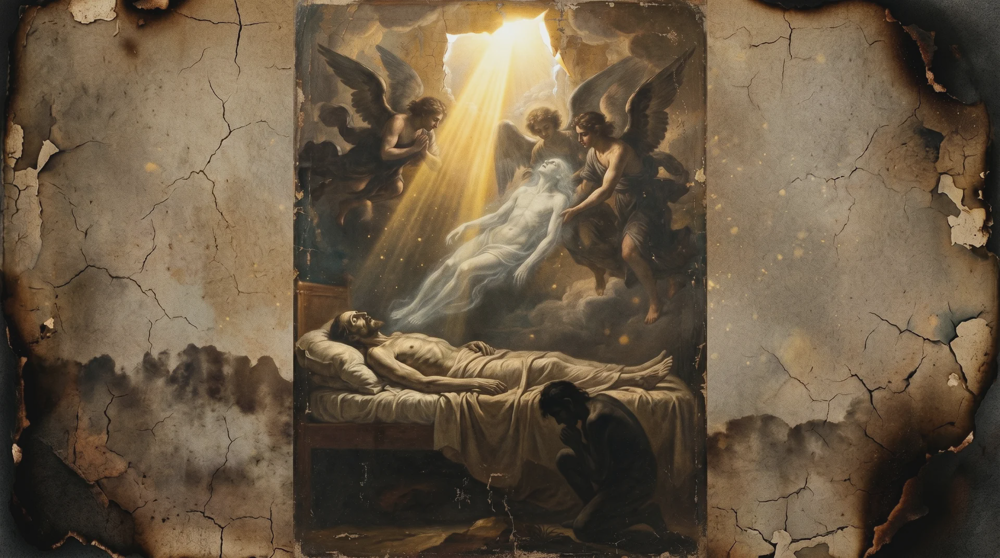
What happens after death? At the moment of death the soul is separated from the body, and at that very instant it appears before God to be judged. This is the Particular Judgment. From it the soul passes at once to one of three states: Heaven, either immediately or after a time of purification in Purgatory, or Hell. The body returns to the dust from which it was taken; the soul does not die. At the end of the world the body will rise again and be reunited to its soul, and all men together will face the General Judgment. This is the Catholic answer, and it is the constant answer of Scripture.
The soul does not die with the body
To understand what happens after death we must first distinguish the two parts of which man is made: the soul and the body. The Catechism of Trent is precise on this point. Of these two parts, "the body alone is subject to corruption and returns to the dust whence it was taken, whereas the soul is absolutely incorruptible." Death is exactly this separation. The body decays; the soul, being immortal, lives on. This is why Scripture, when it promises the resurrection, calls it "the resurrection of the body" and not of the soul — for the soul never died and so cannot, properly speaking, rise again.
Life after death, for the Catholic, is not a vague survival or a memory in the minds of the living. It is the continued, conscious existence of an immortal soul that must now answer for the life it led in the body.
What happens to the body after death
When men ask what happens to the dead body after death, they often mean the visible, physical process. The Church does not deny it; she sees in it exactly what Scripture foretold. At the moment the soul departs, the body is a corpse, and a corpse follows the law God set after the Fall: "dust thou art, and into dust thou shalt return" (Genesis iii. 19). The flesh grows cold and rigid, then begins to corrupt and dissolve, until in time only the bones, and at last the dust, remain. The Catechism of Trent states the principle without flinching: "the body alone is subject to corruption and returns to the dust whence it was taken."
This is why the Church treats the dead body with reverence but without illusion. She buries it, blesses it, and prays over it, because it was the temple of a baptised soul and is destined to rise again; but she does not pretend the corruption is anything other than what it is. The decay of the body is not a defeat of the soul, which has already gone to its judgment, but the keeping of an ancient sentence — one that the resurrection will one day reverse. What happens to the corpse, then, is real and it is sober: it returns to the earth, and it waits. The traditional Bible verses for funerals say both things at once — the dust to which the flesh returns, and the resurrection for which it waits.
What happens to the brain, the eyes, and the senses after death
Because the senses belong to the body, they share the body's fate. The brain, the eyes, and every organ of sense cease to function at death and decay with the rest of the flesh; the body neither sees, nor hears, nor thinks. But this does not mean the man himself has gone blind or unconscious, for sight and thought belong first to the soul, which uses the bodily organs as its instruments while it is joined to the body. When the soul is separated, it does not lose its powers of knowing and willing; it knows in the manner proper to a spirit, no longer through the eye and the brain. The decay of the organs of sense, therefore, tells us nothing about the soul. The eyes that close in death are the windows, not the seer.
What happens to consciousness after death
Some ask, in plain modern terms, what happens to consciousness after death — does awareness simply switch off? The Catholic answer is that consciousness is not produced by the brain as a lamp is produced by electricity, to be extinguished when the current stops. The soul is spiritual and immortal, and its proper acts — to know and to love — are spiritual acts that do not depend on bodily organs to exist. Death does not end awareness; it changes its mode. The soul after death is fully conscious, more keenly than ever, for it now sees the truth of its own life and stands before God. This is why the Church rejects the idea of "soul sleep," the notion that the dead lie unconscious until the last day. Scripture shows the opposite: the rich man and Lazarus are both fully aware at once (Luke xvi. 22-31), and Our Lord promises the good thief, "this day thou shalt be with me in paradise" (Luke xxiii. 43) — this day, not at the end of time.
What happens to the soul after death
We have said the soul does not die; now we say where it goes. The instant the soul leaves the body it is fully itself — intelligent, free, awake — and it appears before God. From that meeting it passes, without delay, to the state its life has earned: Heaven, Purgatory, or Hell. The soul carries nothing of this world with it but the love or the refusal of God it has fixed within itself. It takes no money, no body, no second chance; it takes only what it has become. This is the whole drama of the four Last Things, and it turns entirely on the state of the soul at the moment of death — which is why the Church prays, in her oldest litanies, "from a sudden and unprovided death, deliver us, O Lord." The soul after death is not asleep and not annihilated; it is judged, and then it begins its eternity.
The Particular Judgment: the soul after death faces God
The Catechism of Trent teaches that each of us must appear before God at two distinct times. "The first comes at the moment when we have just departed from this life. At that very instant, each one appears before the tribunal of God, and there he undergoes a rigorous examination concerning all that he has done, all that he has said, all that he has thought during his life. This is what is called the Particular Judgment."
There is no delay, no sleep, no second chance. The soul after death meets its Judge immediately. The judgment falls on everything — not only on actions and words, but, as Trent insists, even on "one's most secret thoughts." As Ecclesiasticus says, in a verse the Catechism cites: "In all thy works remember thy last end, and thou shalt never sin."
The Catechism of St Pius X gathers death and judgment, together with their two outcomes, under one heading: the Four Last Things. "There are for man four Last Things: Death, Judgment, Hell, and Heaven." Death is the last thing that happens to man in this world; the Judgment of God is the last of the judgments we must undergo; Hell is the extreme evil for the wicked; Heaven, the sovereign good for the good. We treat each of these in turn in our study of the Four Last Things.
After the judgment: Heaven, Purgatory, or Hell
From the Particular Judgment the soul passes immediately to its lot. There are three possibilities.
Heaven, at once or after Purgatory
The soul that dies in the grace of God and free of all debt enters at once into the beatitude the Church calls life everlasting. The Catechism of Trent is careful to explain that the words Life Everlasting designate "not so much the eternity of the life of the Saints — since the demons and the wicked will live eternally as well as the good — as the eternity of their beatitude; a beatitude which will fill full all their desires." This happiness does not consist in any earthly or perishable thing, but in the sight of God Himself. We treat this blessedness more fully in what is Heaven.
Many souls, however, die in grace but still owe a debt for sins already forgiven, or carry the stain of lesser faults. These are saved, but not yet pure enough to behold God. They pass through Purgatory, where they are cleansed and then admitted to Heaven. Purgatory is not a third final destiny — every soul there is among the saved — but a passage. We explain it in detail in what is Purgatory.
Hell
The soul that dies in mortal sin, unrepentant, is lost. The Catechism of Trent names the two pains of Hell from the sentence Our Lord Himself will pronounce: "Depart from Me, ye cursed, into the everlasting fire which was prepared for the devil and his angels." The first and greatest is the pain of loss — to be "driven out and entirely deprived of the sight of God," forever. The second is the pain of sense, signified by the fire.
Mgr de Ségur, writing against the false and theatrical images men forge for themselves, brings us back to what Hell truly is: "Damnation is total separation from GOD. A damned soul is a creature totally and definitively deprived of his GOD." We are made for God as the eye is made for the light; in this life a thousand things distract us from feeling it, "but after death, truth resumes all its rights." For the lost, that meeting is the discovery of an absolute and irreparable void. We treat this soberly, without sensationalism, in does Hell exist.
What happens at the end of the world: resurrection and the General Judgment
The Particular Judgment settles the soul's eternal state. But the body still lies in the earth, and the story of man is not yet whole. At the end of the world comes the second of the two times the Catechism of Trent describes: "when all men gathered together, on the same day and in the same place, shall appear before the tribunal of their Judge." This is the General Judgment.
Before it, the dead rise. The Creed itself confesses "the resurrection of the body." The Catechism of Trent calls it "in some sort the most solid foundation of our heavenly hopes," quoting Saint Paul: "If the dead rise not again, then Christ is not risen again; and consequently our preaching is vain, and our Faith is also vain." Each soul is reunited to its own body, now incorruptible, so that the whole man — soul and body together — receives his reward or his sentence.
Why a second judgment is needed
If each soul is already judged at death, why a General Judgment at all? The Catechism of Trent gives the reasons. The body shared in the deeds of this life, "since our bodies have been the instrument" of good and evil alike; it is therefore fitting that the body, raised again, share in the reward or chastisement. Further, the influence of a man's example outlives him and ends only at the last day, so justice requires a final reckoning of all its fruits. And the providence of God, often hidden here below where "adversity and prosperity are well-nigh indifferently the lot of the good and of the wicked," will then be made manifest before all, the reputation of the just restored, and the sentence of each made known "in the sight of all men of all the ages."
What the Bible says happens after death
The Catholic answer is not a later invention; it is drawn straight from Scripture. Saint Paul states the universal reckoning: "we must all appear before the judgment seat of Jesus Christ, that every one may receive the proper things of the body, according as he hath done, whether it be good or evil." Our Lord gives the very words of the final sentence — "Come, ye blessed of my Father" to the just, and "Depart from Me, ye cursed" to the lost. The day itself is hidden: "of that day and hour no one knoweth." And the Creed, the Church's ancient summary of the faith of the Apostles, closes the matter in two articles the Church has always confessed: "the resurrection of the body" and "life everlasting."
What do Catholics believe happens after death, and how it differs from other faiths
People often search not only for the Catholic answer but for how it compares with what others believe. We state our own faith plainly and describe the others fairly, without caricature, holding to the rule that we judge truth by Christ and His Church.
What Catholics believe. As set out above: the soul is immortal; at death it is judged at once (the Particular Judgment) and passes immediately to Heaven, Purgatory, or Hell; the body returns to dust but will rise again at the General Judgment, when the whole man receives his eternal lot. Heaven and Hell are everlasting; Purgatory is a temporary cleansing for souls already saved.
What other Christians believe. Most Christians share belief in the immortal soul, judgment, Heaven, and Hell, and in the resurrection of the body confessed in the Creed. The chief divergence concerns Purgatory and prayer for the dead, which Protestant communities generally reject, and which the Catholic Church has always held — relying on the Scripture that calls it "a holy and wholesome thought to pray for the dead, that they may be loosed from sins" (2 Maccabees xii. 46).
What Jews believe. The Old Testament, the Scripture of the Jewish people, already teaches the immortality of the soul, a judgment, and the resurrection of the dead — "many of those that sleep in the dust of the earth shall awake" (Daniel xii. 2). Faithful Jews looked for these things; later Jewish thought speaks variously of Sheol, a purifying intermediate state, and the world to come. What the Catholic faith adds is that the judgment is given to Jesus Christ, who has risen as "the firstfruits of them that sleep" (1 Corinthians xv. 20).
What Muslims believe (Islam). Islam teaches a bodily resurrection and a Day of Judgment leading to Paradise or the Fire — a structure outwardly resembling the Christian one. But it denies the divinity and the redeeming death and resurrection of Christ, which for the Catholic are the very ground of the resurrection and the only gate to Heaven. The likeness is real on the surface; the foundation is wholly different.
What Buddhists and Hindus believe. Buddhism and Hinduism teach not a single life followed by judgment but reincarnation — a long chain of rebirths governed by karma, from which the goal is release (moksha, or nirvana, the extinction of craving). The Catholic faith firmly rejects reincarnation. Scripture says plainly: "it is appointed unto men once to die, and after this the judgment" (Hebrews ix. 27). We live once, die once, and are judged once; there is no wheel of returns.
What Mormons believe. The Latter-day Saints teach a spirit world of paradise and prison after death, followed by resurrection into graded "degrees of glory," with very few finally lost. The Catholic Church does not accept this scheme; she holds to the two final and everlasting destinies of Heaven and Hell taught by Christ — "these shall go into everlasting punishment: but the just, into life everlasting" (Matthew xxv. 46) — with Purgatory as a passage to Heaven, not a separate destiny.
The pattern is constant: where another faith preserves a fragment of the truth — the immortal soul, a judgment, a resurrection — we recognise it gladly. But the whole truth, and the only sure hope, is found in the One who died and rose: "I am the resurrection and the life: he that believeth in me, although he be dead, shall live" (John xi. 25).
Will we ever know what really happens after death?
Some ask whether anyone can truly know what happens after death, or whether it is all guesswork that we will discover only when we get there. The Catholic does not rest his hope on near-death reports, private visions, or speculation, all of which are uncertain and easily deceived. He rests it on something firmer: the word of God, and above all the fact of the Resurrection. We know what lies beyond death not because a man came back to describe his own feelings, but because the Son of God died, truly rose, and told us. "Because I live, you also shall live" (John xiv. 19). What really happens after death is not hidden from faith; it is hidden only from those who will not believe the One who has been through death and returned in glory. We will indeed "know" it fully when we die — but we are not left to wait blind until then. The Church already holds the answer, on the authority of Christ.
How to prepare
The Church does not set the Last Things before us to frighten, but to wake. The Catechism of St Pius X advises us to think of them "every day, and particularly when saying our prayers in the morning on awakening, in the evening before our rest, and every time we are tempted to do evil." The remedy is at hand. The man who keeps his soul in the grace of God by sincere repentance has nothing to dread in the judgment. This is why the Church places the sacrament of Penance within reach of every sinner; we give a plain method in how to go to Confession.
Frequently Asked Questions
What Happens After Death?
At the moment of death the soul is separated from the body and appears at once before God for the Particular Judgment. From it the soul passes immediately to Heaven, to Purgatory (and thence to Heaven), or to Hell, according to the state in which it died. The body returns to the dust, but the soul, being immortal, does not die. At the end of the world the body will rise again and be reunited to its soul for the General Judgment.
What Happens to the Body After Death?
The body and the soul are separated at death, and the two have different fates. The Catechism of Trent teaches that "the body alone is subject to corruption and returns to the dust whence it was taken, whereas the soul is absolutely incorruptible." The body therefore decays in the earth, but not forever: at the end of the world it will rise again, incorruptible, as the Creed confesses in "the resurrection of the body." Each soul will be reunited to its own body, so that the whole man — soul and body together — receives his reward or his sentence.
What Does the Bible Say Happens After Death?
Scripture teaches that death is followed by judgment, not by sleep or annihilation: "it is appointed unto men once to die, and after this the judgment" (Hebrews ix. 27). Saint Paul declares that "we must all appear before the judgment seat of Jesus Christ, that every one may receive the proper things of the body, according as he hath done, whether it be good or evil" (2 Corinthians v. 10). The soul passes at once to its reward or punishment, and at the end of the world the body will rise again, as the Creed confesses in "the resurrection of the body" and "life everlasting."
What Are the Three States the Soul Can Enter After Death?
After the Particular Judgment the soul passes immediately to one of three states. The soul that dies in the grace of God and free of all debt enters at once into Heaven, the beatitude the Catechism of Trent calls Life Everlasting. The soul that dies in grace but still owes a debt for forgiven sins, or carries the stain of lesser faults, is saved but must first be cleansed in Purgatory before being admitted to Heaven. The soul that dies in unrepented mortal sin is lost in Hell, suffering above all the pain of loss — to be, in the words of Trent, "entirely deprived of the sight of God" forever. Purgatory is not a final destiny but a passage; every soul there is among the saved.
When Will the Body Rise Again?
The Particular Judgment settles the soul's state at once, but the body remains in the earth until the end of the world. At the General Judgment, as the Catechism of Trent teaches, "all men gathered together, on the same day and in the same place, shall appear before the tribunal of their Judge." Before it, the dead rise: the Creed confesses "the resurrection of the body," which Trent calls "in some sort the most solid foundation of our heavenly hopes." Each soul is reunited to its own body, now incorruptible, so that the whole man — soul and body together — receives his reward or his sentence.
What Happens to the Soul After Death?
At the instant of death the soul is separated from the body and appears before God for the Particular Judgment. It is fully conscious and fully itself — knowing and willing in the manner proper to a spirit, no longer through the brain or the senses. From the judgment it passes at once to one of three states: Heaven (immediately, or after Purgatory) or Hell, according to whether it died in the grace of God or in unrepented mortal sin. The soul carries nothing of this world with it but the love or the refusal of God it has fixed within itself. It is never annihilated and never asleep; the Church explicitly rejects the idea of "soul sleep."
What Happens to Consciousness After Death?
Catholic teaching holds that consciousness does not switch off at death. The soul is spiritual and immortal, and its acts of knowing and loving do not depend on the brain to exist. Death does not end awareness; it changes its mode — the soul now knows as a spirit knows, more keenly than ever, for it sees the truth of its own life and stands before God. Scripture shows the dead fully aware at once: the rich man and Lazarus in Luke xvi, and Our Lord's promise to the good thief, "this day thou shalt be with me in paradise" (Luke xxiii. 43).
What Do Catholics Believe Happens After Death?
Catholics believe the soul is immortal and is judged the moment it leaves the body (the Particular Judgment), passing at once to Heaven, to Purgatory and thence to Heaven, or to Hell. The body returns to dust but will rise again, incorruptible, at the General Judgment at the end of the world, when the whole man — soul and body together — receives his eternal reward or sentence. Heaven and Hell are everlasting; Purgatory is a temporary cleansing for souls already among the saved. This is drawn directly from Scripture and confessed in the Creed: "the resurrection of the body, and life everlasting."
What Really Happens After Death — Can We Know?
The Catholic does not base his hope on near-death reports or private visions, which are uncertain, but on the word of God and the fact of the Resurrection. We know what lies beyond death because the Son of God truly died, rose, and told us: "Because I live, you also shall live" (John xiv. 19). What really happens after death is not hidden from faith, only from those who will not believe the One who has passed through death and returned in glory.
Do Catholics believe in reincarnation?
No. The Catholic Church firmly rejects reincarnation, the belief held in Hinduism and Buddhism that the soul passes through a chain of rebirths. Scripture is explicit: "it is appointed unto men once to die, and after this the judgment" (Hebrews ix. 27). Man lives once, dies once, and is judged once; there is no wheel of returns and no second earthly life.
Do Catholics and Jews believe the same thing about life after death?
They share much and differ on the decisive point. The Old Testament, the Scripture of the Jewish people, already teaches the immortality of the soul, a judgment, and the resurrection of the dead — "many of those that sleep in the dust of the earth shall awake" (Daniel xii. 2) — and faithful Jews looked for these things. What the Catholic faith adds, and what Judaism does not confess, is that this judgment is given to Jesus Christ and that He has Himself risen as "the firstfruits of them that sleep" (1 Corinthians xv. 20), opening heaven to those who die in His grace. The hope of resurrection is common ground; its fulfilment in the risen Christ is the Christian difference.
What happens after death is therefore not darkness but judgment, and judgment is not the end but the door — to Heaven, by the mercy of God, for those who die in His friendship. The hour is hidden; the outcome is not yet fixed. We have today.
To prepare for a holy death, you will find the prayers for the dying and a step-by-step confession guide in the Iter Fidei app. Download it here.
Sources. Catechism of the Council of Trent (Roman Catechism, 1566), on the Seventh Article ("From thence He shall come to judge the living and the dead"), the Eleventh Article ("the resurrection of the body"), and the Twelfth Article ("life everlasting"); Catechism of St Pius X (1908), Part V, "The Last Things"; Mgr de Ségur, Hell ("What Hell Is"). Scripture cited from the Douay-Rheims (Genesis, Daniel, 2 Maccabees, Matthew, Luke, John, 1 Corinthians, 2 Corinthians, Hebrews, Ecclesiasticus, the Apostles' Creed).