The Liturgical Year
Christmas: The Nativity of Our Lord
Christmas is the feast of the Nativity of Our Lord Jesus Christ on the 25th of December — the Word made flesh, born of the Virgin Mary in Bethlehem. Its meaning, the three Masses of Christmas, the crib, the date and the Sun of Justice, in the traditional Roman calendar.
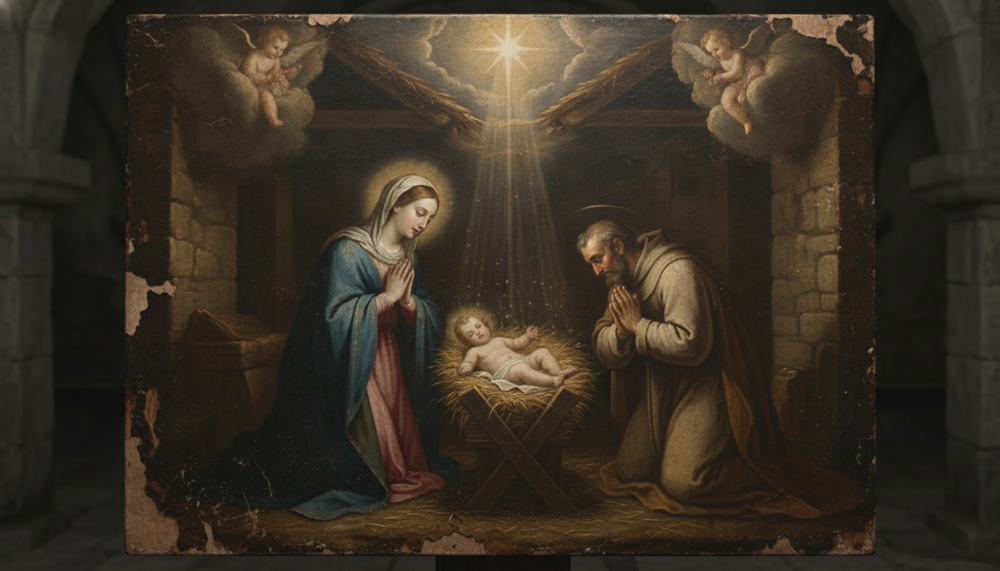
Christmas is the feast of the Nativity of Our Lord Jesus Christ, kept on the 25th of December, on which the Church celebrates the birth of the Son of God, made man and born of the Virgin Mary in Bethlehem. We celebrate Christmas because on this day the Word, who is God, took our flesh for our salvation: "And the Word was made flesh, and dwelt among us" (St John 1:14). This is the Christmas the Church keeps — not a winter holiday, but the feast of the Incarnation, the day the Eternal entered time.
Why do we celebrate Christmas
We celebrate Christmas because on this night the promised Redeemer was born. The whole meaning of the feast is held in one Gospel verse: "And the Word was made flesh, and dwelt among us" (St John 1:14). The Son of God, true God of true God, took a body and a soul like our own in the womb of the Blessed Virgin, and was born into the world to redeem it. The Roman Catechism of the Council of Trent calls this "the very foundation of our Salvation," and bids us meditate the birth "with deep joy and lively gladness," for in it "began to be accomplished the magnificent promise which God had made to Abraham, to bless one day all the nations in his posterity."
The birth itself St Luke relates plainly: "And she brought forth her firstborn son, and wrapped him up in swaddling clothes, and laid him in a manger, because there was no room for them in the inn" (St Luke 2:7). The Roman Catechism marvels that the Evangelist hides "under more humble terms that majesty and that glory which fill heaven and earth." That is the Catholic meaning of Christmas: God made small, that man might be made great.
The Nativity: the Word made flesh
The Nativity is the birth in time of the Son who is eternally begotten of the Father. He did not begin to exist at Bethlehem; he who was born of the Virgin is the same Word who "was in the beginning with God" (St John 1:2). What began at Bethlehem was his human birth — God assuming our nature without ceasing to be God.
The Roman Catechism is exact on this point: the two natures, divine and human, are united "in but one and the same Person," each keeping "its own operations and properties." So the Child in the manger is true God and true man, and Mary, who bore him, "could truly and properly be called Mother of God." The Nativity is the birth of one divine Person in two natures.
Isaias foretold it centuries before: "For a CHILD IS BORN to us, and a son is given to us, and the government is upon his shoulder: and his name shall be called Wonderful, Counsellor, God the Mighty, the Father of the world to come, the Prince of Peace" (Isaias 9:6). The feast keeps that prophecy fulfilled.
The three Masses of Christmas
Christmas is unique in the traditional Roman calendar: every priest may offer three Masses on this one day, each with its own proper texts. They are an ancient inheritance, and together they unfold the mystery in stages.
The Mass at Midnight — the Midnight Mass — celebrates the eternal birth and the birth in the flesh at once. Its Introit is the word of the Psalm read of the Son: "The Lord hath said to me: Thou art my Son, this day have I begotten thee" (Psalm 2:7). The Gospel is St Luke's account of the shepherds and the angels: "Glory to God in the highest; and on earth peace to men of good will" (St Luke 2:14).
The Mass at Dawn keeps the shepherds finding the Child: "they found Mary and Joseph, and the infant lying in the manger" (St Luke 2:16). The Mass of the Day sets before the faithful the deepest word of the feast — the Last Gospel of every traditional Mass, here proclaimed as the Gospel itself: "In the beginning was the Word, and the Word was with God, and the Word was God ... And the Word was made flesh, and dwelt among us" (St John 1:1, 14). Midnight gives the manger; the Day gives the eternal Word who lies in it.
The date and the Sun of Justice
Why the 25th of December? The Church has long seen in the date a fitness, not an accident. Christ is called by the prophet Malachias "the Sun of justice": "But unto you that fear my name, the Sun of justice shall arise, and health in his wings" (Malachias 4:2). His birth is set near the winter solstice, when the natural sun, having reached its lowest point, begins again to climb. As the light returns to the world, the Church proclaims the rising of the true Light — "the people that walked in darkness have seen a great light" (Isaias 9:2). The Christian feast did not borrow its meaning from the turning of the year; it claimed the turning of the year for Christ, the Sun of Justice who scatters the darkness of sin.
This is why the season of Advent precedes the feast as a preparation by penance: the light of the Advent wreath, growing week by week toward Christmas, answers the coming of the Light of the world.
The crib and the traditions of Christmas
The Nativity scene — the crib, or crèche — sets before the eyes what the Gospel sets before the mind: the Child in the manger, Mary and Joseph, the shepherds, the ox and the ass, and at Epiphany the Magi. The custom in its living form comes to us from St Francis of Assisi, who at Greccio in 1223 set up a manger with hay and a living ox and ass, that the people might see the poverty into which the Son of God was born. From that night the crib spread through the whole Church and into every Catholic home.
The crib is a sacramental of the household, like the Advent wreath and the other helps the Church gives to carry her mysteries into the family (see sacramentals). It teaches the Mass's lesson: that we should make room in our hearts for the One who found no room in the inn. The Roman Catechism warns of exactly this — "lest, as our Lord found no room in the inn to be born therein, so He find no more room in our hearts to take birth therein."
For those who ask in what year the Lord was in fact born, and how the date came to be fixed, we treat the question more fully in when was Jesus born.
Christmas and the Catholic Church: a Roman Catholic feast
Christmas belongs to the Catholic Church in the deepest sense: it was the Church that appointed the feast, fixed it to the 25th of December, and gave it the three Masses and the long season that crowns it. The Roman Catholic keeping of Christmas is not merely the gift-giving of the world but the worship of the newborn God at the altar. To ask "do Catholics celebrate Christmas?" is to ask whether the Church keeps the feast of the Incarnation she herself instituted — and the answer is that she keeps no feast more solemnly. The Catholic Christmas is centred on Mass, not on the things that surround it; the rest of the customs — the crib, the carols, the cards, the tree — are servants of that one act of adoration.
What does the Bible say about Christmas?
Holy Scripture does not name the feast of "Christmas" — the word and the date are the Church's appointment, not the Bible's. But Scripture gives the whole substance the feast celebrates. St Luke tells the birth: "And she brought forth her firstborn son, and wrapped him up in swaddling clothes, and laid him in a manger" (St Luke 2:7). St Matthew tells of the Magi and the star (St Matthew 2:1-11). St John gives the eternal ground of it: "And the Word was made flesh, and dwelt among us" (St John 1:14). Isaias foretold it: "For a CHILD IS BORN to us, and a son is given to us" (Isaias 9:6). So while the Bible does not command a feast on a fixed day, it commands the truth the feast proclaims — and the Church, with her God-given authority to order worship, set a day on which that truth is honoured. The day is the Church's; the mystery is God's.
Some object that because Scripture does not name a Christmas day, Christians should keep none. But Scripture nowhere forbids the Church to appoint feasts; the apostles themselves kept the Lord's Day, which no command of the Old Law named. The Church does for the Nativity what she does for Easter: she sets a day for the faithful to keep together a mystery Scripture reveals.
What does the Bible say about Christmas trees?
The Christmas tree is a Christian custom of the household, not a thing the Bible names or commands. The verse most often quoted against it — Jeremias 10:3-4, "for the works of the hand of the workman... he hath decked it with silver and gold" — speaks of carving an idol from wood to worship it, not of an evergreen set up in a home as an ornament. A Christmas tree is no idol; no Catholic adores it, prays to it, or offers it sacrifice. It is a decoration, and the evergreen has been read by Christians as a sign of the life that does not die — fitting for the feast of him who came that we might have life. The Church gives it no liturgical place and binds no one to it; it is a free custom of the home, to be kept with thanksgiving and never with superstition. The heart of a Catholic Christmas is the crib and the altar, not the tree.
The Christmas season: from the Nativity to Candlemas
The Christmas season in the Catholic Church does not end on the 25th — it begins there. The Nativity opens an Octave of eight days, within which fall the feasts of St Stephen, St John the Evangelist, the Holy Innocents, and the Circumcision of Our Lord on the 1st of January, the octave day. The season then runs to the Epiphany on the 6th of January and its own octave, and through the Sundays after Epiphany, until it closes at Candlemas, the Purification of Our Lady, on the 2nd of February — forty days after the birth, when by ancient custom the crib is put away. This is why a Catholic keeps Christmas well past Christmas Day, while the world has long since taken down its lights.
The twelve days of Christmas
The "twelve days of Christmas" are the days from the Nativity on the 25th of December to the eve of the Epiphany on the 6th of January — the span the old song counts. They are not a countdown to Christmas but the festive days that follow it, the heart of the Octave and the days leading to the coming of the Magi. In the traditional calendar these are days of rejoicing, the manger still set up and the candles still lit, until Epiphany crowns them with the adoration of the Wise Men.
Counting the days to Christmas: the Advent calendar
The custom of counting the days to Christmas belongs properly to Advent, the season of preparation that precedes the feast. The Advent calendar — opening one window or door for each day of December until Christmas — is a help of the household, like the Advent wreath, to keep the days of waiting before the eyes of children and to teach that the feast is worth preparing for. Kept well, it is not a mere countdown to presents but a daily turning of the heart toward the coming of the Light; each day opened can carry a verse of Scripture, a small prayer, or a figure for the crib. The wreath marks the four Sundays of Advent by its growing light; the calendar marks the single days. Both answer the same truth: that we make ready, by penance and prayer, for the One who is to come.
A Christmas prayer for the family
Christmas is kept first in the home, around the crib and the table. A family may say together this prayer of blessing before the meal of the Nativity, or kneeling at the crib:
O God, who hast made this most holy night to shine with the brightness of the true Light: grant, we beseech thee, that as we have known the mystery of that Light upon earth, so we may also attain to the fruition of his joys in heaven. Through the same Christ our Lord. Amen.
This is the ancient Collect of the Midnight Mass, and the family may make it their own. To the newborn Saviour the household may also commend itself in simpler words:
Sweet Infant Jesus, born in the poverty of Bethlehem, be born anew in our home and in our hearts. Bless this family gathered before thy crib; keep us in thy peace; and grant that, having adored thee here below, we may praise thee for ever in heaven. Amen.
For the deeper consecration of the household, see the enthronement of the Sacred Heart and the prayers the Church gives for the family.
A blessing prayer for Christmas
The Church blesses the things of the feast — the crib, the home, the table. A father, as head of the household, may bless the family table at Christmas with these words, or the like:
Bless, O Lord, this food and this house, and all who dwell herein; and as thou hast gladdened us by the birth of thy Son, so make us glad in his coming again in glory. Through Christ our Lord. Amen.
And the crib itself may be blessed when it is set up, the family praying:
O God, who didst will that thy only-begotten Son should be born of the Virgin Mary in a stable and laid in a manger: grant that we who keep his birth before this crib may know him on earth and behold him for ever in heaven. Through the same Christ our Lord. Amen.
Such blessings are sacramentals — they are not magic, and their fruit is asked of God, not compelled. Where a priest is at hand, the crib and the home may be blessed by him with the Church's own rite.
A note on Christmas cards and greetings
A Catholic Christmas card carries the greeting of the feast itself — the angels' word over Bethlehem, "Glory to God in the highest; and on earth peace to men of good will" (St Luke 2:14), or simply the wish of the Nativity. To send such a greeting is a small work of charity proper to the season, a way of carrying the joy of the Incarnation to others. The custom is free and the Church binds no one to it; but a card that names the Child rather than only the season keeps the feast in its right meaning.
What Christmas asks of us
The feast is kept rightly not by the things that surround it but by the thing it is. We adore the newborn God; we go to his altar, where the same Christ born at Bethlehem is made present in the Blessed Sacrament; we make room in the soul for him to be born there, as the Roman Catechism says, "no longer according to the flesh, but according to the spirit." The God who humbled himself to the manger did so "to raise mankind to the highest degree of glory."
That is why we keep Christmas: not as a season's celebration, but as the feast of the day God became one of us, that we might become his own.
Frequently Asked Questions
Do Catholics celebrate Christmas?
Yes — Christmas is one of the chief feasts of the Catholic year, the feast of the Nativity of Our Lord Jesus Christ on the 25th of December. The Church keeps it not as a winter holiday but as the feast of the Incarnation, the day the Word was made flesh and dwelt among us (St John 1:14). In the traditional Roman calendar every priest may offer three Masses on this one day, an honour given to no other feast but Christmas.
Is Christmas a holy day of obligation?
Yes. The Nativity of Our Lord (25 December) is a holy day of obligation on which Catholics are bound to assist at Mass and to rest from servile work, as on a Sunday. It is among the principal feasts the Church commands the faithful to keep, and the obligation binds wherever the day is observed.
When does the Christmas season end in the Catholic Church?
In the traditional Roman calendar the season of Christmas does not end on the 25th but begins there. It runs through the Octave of the Nativity, the Epiphany (6 January) and its octave, and reaches its close at Candlemas, the Purification of Our Lady, on the 2nd of February — forty days after the Nativity, when the crib is at last put away. The feast of the Holy Family and the Sundays after Epiphany fall within this season.
What does God say about Christmas?
Holy Scripture does not name the feast, which the Church appointed, but it gives the whole substance of it: "And the Word was made flesh, and dwelt among us" (St John 1:14); "For a CHILD IS BORN to us, and a son is given to us... and his name shall be called Wonderful, Counsellor, God the Mighty... the Prince of Peace" (Isaias 9:6); and the angels' word over Bethlehem, "Glory to God in the highest; and on earth peace to men of good will" (St Luke 2:14). To keep Christmas is to keep these words, adoring the newborn God.
Why do we celebrate Christmas on the 25th of December?
The Church has long seen in the date a fitness rather than an accident. Christ is "the Sun of justice" (Malachias 4:2), and His birth is set near the winter solstice, when the natural sun begins again to climb and the light returns to the world. The Christian feast did not borrow its meaning from the turning of the year; it claimed the turning of the year for Christ, the true Light who scatters the darkness of sin.
What does the Bible say about Christmas trees?
The Bible neither names nor commands the Christmas tree, for it is a household custom, not a part of worship. The verse sometimes quoted against it (Jeremias 10:3-4) condemns the carving of an idol from wood to adore it — not the setting up of an evergreen as an ornament. A Christmas tree is no idol; no Catholic prays to it or offers it sacrifice. Christians have read in the evergreen a sign of undying life, fitting for the feast of him who gives life. It is a free custom of the home, to be kept with thanksgiving and never with superstition; the heart of a Catholic Christmas is the crib and the altar, not the tree.
Is Christmas a Catholic or a Roman Catholic feast?
Christmas is a feast of the universal Church, kept by the Roman Catholic Church and by the Eastern rites alike, as well as by many separated Christians. The feast as the West keeps it — the 25th of December, the three Masses, the Octave and the season to Candlemas — is the Roman Catholic ordering of it. The Church appointed the feast and fixed its day; she keeps no feast more solemnly than the Nativity of her Lord.
How many days is the Christmas season, and what are the twelve days of Christmas?
The twelve days of Christmas run from the Nativity on the 25th of December to the eve of the Epiphany on the 6th of January — the festive days that follow Christmas, not a countdown to it. But the full Catholic Christmas season is longer still: it runs through the Octave, the Epiphany and its octave, and the Sundays after Epiphany, and closes only at Candlemas on the 2nd of February, forty days after the birth.
What is a good Christmas prayer for the family?
The family may pray together the ancient Collect of the Midnight Mass: "O God, who hast made this most holy night to shine with the brightness of the true Light: grant... that as we have known the mystery of that Light upon earth, so we may also attain to the fruition of his joys in heaven." A simpler prayer at the crib serves as well: "Sweet Infant Jesus, born in the poverty of Bethlehem, be born anew in our home and in our hearts." Christmas is kept first in the home, around the crib and the table.
Should a Catholic use an Advent calendar to count down to Christmas?
Yes — kept rightly, the Advent calendar is a good help of the household, belonging to Advent, the season of preparation. It is meant not as a countdown to presents but as a daily turning of the heart toward the coming of the Light; each day opened can carry a verse of Scripture, a small prayer, or a figure for the crib. It serves the same end as the Advent wreath: to make ready, by prayer and penance, for the One who is to come.
The Iter Fidei app carries the Douay-Rheims Bible, the catechism, and the prayers of the Church. Download it here.
Sources. Holy Scripture, Douay-Rheims (St John 1:1-2, 14; St Luke 2:6-7, 14, 16; St Matthew 2:1-11; Isaias 9:2, 6; Malachias 4:2; Psalm 2:7; Jeremias 10:3-4). The Catechism of the Council of Trent (Roman Catechism), Part I, Article III, "Who was conceived by the Holy Ghost, born of the Virgin Mary" (the Incarnation and the Nativity as the foundation of our salvation; the two natures in one Person; the Mother of God; the manger and the room in the inn; the lessons of the mystery). The Catechism of St Pius X, Part I, on the Third Article of the Creed (the Son of God conceived by the Holy Ghost and born of the Blessed Virgin Mary). The Roman Missal and the Proper of the Time of the traditional Roman calendar (the three Masses of Christmas — the Mass at Midnight, the Mass at Dawn, and the Mass of the Day — with their proper Introits and Gospels, and the Collect of the Mass at Midnight). The Roman Ritual, on the blessings of the household and of the Nativity crib (blessings as sacramentals, asked of God and not compelled).