
Novenas
Novena to St Thomas More
The full novena to St Thomas More — the nine days' prayers to the martyred Lord Chancellor of England, patron of statesmen, lawyers, judges and politicians, said for justice, for good government, and for an election that would defend life.
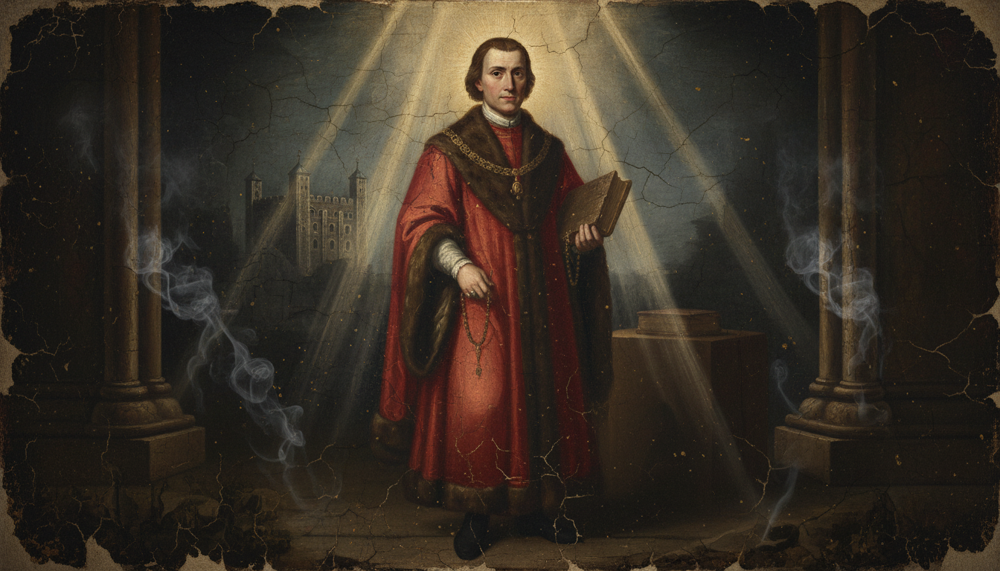
The novena to St Thomas More is a nine-day prayer to the martyred Lord Chancellor of England — the lawyer, statesman and family man who went to the block on Tower Hill in 1535 rather than swear that his king stood above the Church of Christ. It is prayed above all for those who govern and those who judge: for statesmen, politicians, judges and lawyers, that they may defend the sanctity of human life and the rights of God. Below we give the full nine days of the novena, the great prayer St Thomas More wrote in his prison cell, how to pray it (including the form said before an election), and the story of the man.
A note on this devotion
St Thomas More was canonized by Pope Pius XI on 19 May 1935, four hundred years after his death, together with St John Fisher, who died in the same cause. His is a devotion of the traditional Catholic treasury, kept under the old calendar, though his canonization is more recent than those of the ancient martyrs. English Catholics have long kept his feast on 9 July; in the reformed calendar he is honoured with St John Fisher on 22 June. New to this form of prayer? See our guide to what is a novena.
The full novena to St Thomas More
This is the nine-day novena composed in his honour, one prayer for each day. On every day you pray the meditation proper to that day, then an Our Father, Hail Mary and Glory Be, and then the common concluding petition. Name your own intention where the prayer leaves a blank.
The daily concluding prayer
Say this at the close of each of the nine days, after the day's meditation and the three prayers:
Glorious St Thomas More, I beg you to take up my cause, confident that you will advocate for me before God's Throne with the same zeal and diligence that marked your career on earth. If it be in accord with God's will, obtain for me the favour I seek, namely _______.
V. Pray for us, O Blessed St Thomas More.
R. That we may faithfully follow you on the hard road that leads to the narrow gate of eternal life.
First Day — Prudence
Dear St Thomas More, in your earthly life, you were a model of prudence. You never thrust yourself rashly into any serious undertaking; instead, you tested the strength of your powers and waited on God's will in prayer and penance, then boldly carried it out without hesitation. Through your prayers and intercession, obtain for me the virtues of patience, prudence, wisdom and courage.
Our Father… Hail Mary… Glory Be… Then the concluding prayer above.
Second Day — Diligence
Dear St Thomas More, in your earthly life, you were a model of diligence. You shunned procrastination, applied yourself with fervour to your studies, and spared no effort in achieving mastery in any skill. Through your prayers and intercession, obtain for me the virtue of diligence and persistence in my preparations for all undertakings.
Third Day — Industriousness
Dear St Thomas More, in your earthly life, you were a model of industriousness. You threw yourself wholeheartedly into everything you did, and you found enjoyment even in the most serious things. Through your prayers and intercession, obtain for me the grace of always having suitable employment, the grace to find interest in everything fitting, and the fortitude always to pursue excellence in whatever task God gives me to do.
Fourth Day — Justice
Dear St Thomas More, in your earthly life, you were a brilliant lawyer and a just and compassionate judge. You attended to the smallest details of your legal duties with the greatest care, and you were unflagging in your pursuit of justice tempered by mercy. Through your prayers and intercession, obtain for me the grace to overcome every temptation to laxity, arrogance, and rash judgment in my duties.
Fifth Day — Humility
Dear St Thomas More, in your earthly life, you were a model of humility. You never allowed pride to lead you to take on enterprises beyond your abilities; even in the midst of earthly wealth and honour, you never forgot your total dependence on your Heavenly Father. Through your prayers and intercession, obtain for me the grace of an increase in humility, and the wisdom not to overestimate my own powers.
Sixth Day — Family life
Dear St Thomas More, in your earthly life, you were a model husband and father. You were loving and faithful to both of your wives, and a diligent provider and example of virtue for your children. Through your prayers and intercession, obtain for me the grace of a happy home, peace in my family, and the strength to persevere in chastity according to my state of life.
Seventh Day — Fortitude
Dear St Thomas More, in your earthly life, you were a model of Christian fortitude. You suffered bereavement, disgrace, poverty, imprisonment and a violent death; yet you bore all with the strength and good cheer for which you were known throughout your life. Through your prayers and intercession, obtain for me the grace to bear all the crosses that God sends me with patience and joy.
Eighth Day — Faith and perseverance
Dear St Thomas More, in your earthly life, you were a loyal child of God and a steadfast son of the Church, never taking your eyes off the crown for which you strove. Even in the face of death, you trusted in God to give you the victory, and He rewarded you with the palm of martyrdom. Through your prayers and intercession, obtain for me and mine the grace of final perseverance and protection from sudden and unprovided death, so that we may one day enjoy the Beatific Vision in your glorious company.
Ninth Day — Safely home
Dear St Thomas More, you spent your whole earthly life preparing for the life to come. Everything you endured prepared you not only for the glory God wished to bestow upon you in heaven, but for your work as the patron of lawyers, judges and statesmen, and steadfast friend to all who call upon you. Through your prayers and intercession, obtain for us aid in all our necessities, both corporal and spiritual, and the grace to follow in your footsteps, until at last we are safely home with you in the mansions our Father has prepared for us in heaven.
The prayer St Thomas More wrote in the Tower
Awaiting death in the Tower of London, St Thomas More wrote in the margins of his prayer-book a Godly Meditation — one of the most moving prayers a condemned man ever set down. Many join it to the novena, for it shows the soul the nine days ask us to imitate:
Give me Thy grace, good Lord, to set the world at naught; to set my mind fast upon Thee, and not to hang upon the blast of men's mouths; to be content to be solitary; not to long for worldly company; little and little utterly to cast off the world, and rid my mind of all the business thereof; gladly to be thinking of God, piteously to call for His help; to lean unto the comfort of God, busily to labour to love Him; to know mine own vility and wretchedness, to humble and meeken myself under the mighty hand of God; to bewail my sins passed; for the purging of them patiently to suffer adversity; gladly to bear my purgatory here; to be joyful of tribulations; to walk the narrow way that leadeth to life. To have the last thing in remembrance; to have ever afore mine eye my death that is ever at hand; to pray for pardon before the judge come. To think my most enemies my best friends; for the brethren of Joseph could never have done him so much good with their love and favour as they did him with their malice and hatred.
This is the spirit of the litany of humility made flesh — which is why More is invoked not only for legal and public causes but for the grace of a holy death. His steady meditation on the four last things was the discipline of a lifetime.
The novena to St Thomas More for an election
As patron of statesmen and of all who hold public office, St Thomas More is naturally invoked at the time of an election — for the choosing of leaders who will govern justly. The common petition of this devotion is prayed for exactly this end:
St Thomas More, intercede for our statesmen, politicians, judges and lawyers, that they may be courageous and effective in their defence and promotion of the sanctity of human life — the foundation of all other human rights. Obtain for us the election of leaders who will defend life, marriage and religious liberty, and who will not bend the law of God to the will of men. Saint Thomas More, pray for us.
Pray this over the nine days leading to the vote, naming the election and office you have in mind. More knew what it costs a public man to keep faith with God when the state commands otherwise; he is the surest of patrons for all who must vote, campaign, legislate or judge with a Catholic conscience. In grave public matters it is fittingly joined to the novena to St Jude, the patron of causes the world has given up.
The short prayer to St Thomas More
If you cannot keep the full nine days, the Church's own collect for his feast may be said each day in place of the longer form:
O God, who in martyrdom hast brought true faith to its highest expression, graciously grant that, strengthened through the intercession of Saint Thomas More, we may confirm by the witness of our life the faith we profess with our lips. Through Christ our Lord. Amen.
To this many add the invocation: St Thomas More, martyr for conscience and for the Church, pray for us.
How to pray this novena
A novena is nine days of prayer with a single intention, in imitation of the days the Apostles and Our Lady spent praying between the Ascension and Pentecost. To pray this one:
- Choose your intention. Name it plainly — a legal cause, an election, a public office, a family need, the grace of courage, or a happy death.
- Set the dates. Pray on nine consecutive days. To end on his feast, begin on 1 July (for the traditional 9 July feast) or on 14 June (for the 22 June feast); but any nine days will serve.
- Keep the same time each day. Pray the day's meditation, the Our Father, Hail Mary and Glory Be, and the concluding petition. Add the Tower prayer or the collect if you wish.
- Pray in submission. Ask boldly, but end as he did: If it be in accord with God's will. A novena entrusts a cause to a friend at God's Throne and leaves the outcome to Providence. Where you can, join it to Mass and Holy Communion, in the cheerful spirit More himself kept.
Who was St Thomas More?
Sir Thomas More was born in London on 7 February 1478, the son of a judge. Brought up in the household of Cardinal Morton and educated at Oxford, he became the most brilliant lawyer of his age and one of the great scholars of Christendom, the friend of Erasmus and author of Utopia. For a time he weighed a vocation to the Carthusians, and though he married and raised a family, he kept the habits of a religious all his life — hair-shirt, fasting, and daily prayer. His home at Chelsea was famous throughout Europe as a school of learning and piety.
He rose through the King's service until, in 1529, Henry VIII made him Lord Chancellor of England — the first layman to hold the office. But when the King demanded to be recognised as Supreme Head of the Church in England, to cast off his lawful wife Catherine of Aragon and sever the realm from Rome, More could not consent. He resigned the Chancellorship in 1532, withdrew into poverty, and kept a careful silence. It was not enough: in 1534 he refused the Oath of Supremacy and was imprisoned in the Tower, where he wrote his greatest spiritual works and prepared for death with the good humour that never left him.
On 6 July 1535 he was beheaded on Tower Hill. On the scaffold he asked the crowd to pray for him and to bear witness that he died "the King's good servant, and God's first." He forgave his executioner and laid his head on the block. His severed head was set on London Bridge, whence his daughter Margaret Roper retrieved it and kept it until her own death. He died, as he had lived, a martyr not for a private opinion but for the freedom of the Church and the supremacy of God's law over the will of princes.
He was beatified by Pope Leo XIII in 1886 among the English Martyrs, and canonized by Pope Pius XI on 19 May 1935 with St John Fisher. He is honoured as the patron of statesmen, politicians, lawyers, judges and civil servants, and is invoked as well for difficult marriages, for large families, and for the grace of constancy under trial — much as the faithful turn to St Joan of Arc, another who chose the judgment of God over the judgment of men, or to St Monica for the burdens of the home.
Frequently Asked Questions
Who is St Thomas More the patron saint of?
St Thomas More is the patron saint of statesmen, politicians, lawyers, judges and civil servants — of all who must weigh the law of the land against the law of God. As a devoted husband and father he is also invoked for families, difficult marriages, and adopted and foster children; and for his constancy under suffering, for those who bear disgrace or persecution for conscience' sake. Pope John Paul II named him patron of statesmen and politicians in the year 2000.
When is the feast day of St Thomas More?
English Catholics have traditionally kept his feast on 9 July. In the reformed calendar he is celebrated together with St John Fisher on 22 June, the anniversary of Fisher's martyrdom. To end the novena on his feast, begin nine days before the date you keep.
How did St Thomas More die?
He was beheaded on Tower Hill in London on 6 July 1535, condemned for treason after refusing to swear that King Henry VIII was Supreme Head of the Church in England. He met death with famous serenity, telling the crowd he died "the King's good servant, and God's first," forgiving his executioner, and even joking as he laid his head on the block. The Church honours him as a martyr for the faith and the authority of Christ's Church.
Can I pray the novena to St Thomas More for an election?
Yes. As the patron of statesmen and politicians, More is often invoked before an election, asking that leaders be chosen who will defend human life, marriage, religious liberty and justice. Pray the nine days leading up to the vote, using the petition that he "intercede for our statesmen, politicians, judges and lawyers." Ask plainly for good government, and leave the outcome to God.
Why is St Thomas More the patron of lawyers?
Because he was himself the finest lawyer of his day and, as Lord Chancellor, one of the most just and merciful judges the realm had known — famous for clearing the backlog of cases and for taking no bribe. Yet he showed that the law must bow to a higher law: when the King's command clashed with the law of God, More obeyed God at the cost of his life. He is therefore the model of the Catholic lawyer and judge, who serves justice without idolising the state.
Is there a short version of the novena to St Thomas More?
Yes. If you cannot pray the full nine daily meditations, you may say the Church's collect for his feast each day — "O God, who in martyrdom hast brought true faith to its highest expression…" — with an Our Father, Hail Mary and Glory Be, and the invocation "St Thomas More, pray for us." Said with your intention over nine days, this is a complete novena.
What did St Thomas More pray in prison?
Awaiting execution in the Tower of London, he wrote a Godly Meditation beginning "Give me Thy grace, good Lord, to set the world at naught." It is a prayer for detachment from the world, for a happy death, and for the grace to count one's enemies as one's best friends. It is given in full above.
Pray the novena to St Thomas More with day-by-day reminders and audio, alongside the litanies, chaplets and prayers of the Church's treasury, in the Iter Fidei app. Download it here.
Sources. The novena to St Thomas More (composed by Anita Moore, OPL); the collect for the feast of St Thomas More; St Thomas More, A Godly Meditation and A Dialogue of Comfort against Tribulation, written in the Tower of London (1534–1535); the record of his martyrdom, 6 July 1535 ("the King's good servant, and God's first"); the beatification of the English Martyrs by Pope Leo XIII (1886) and the canonization of Ss Thomas More and John Fisher by Pope Pius XI (19 May 1935); Holy Scripture (Genesis 37 and 45, on Joseph and his brethren).